








Summary
How to repair the Equality Act 2010 is taken from Melanie Field's post on LinkedIn and her participation at TransLucent's Parliamentary event "What will equality look like in the future?"
How to repair the Equality Act 2010
On Tuesday, 17 November, Kate Osborne MP hosted TransLucent’s event in Parliament titled: What will equality look like in the future? A discussion with human rights campaigners, legal professionals and politicians.

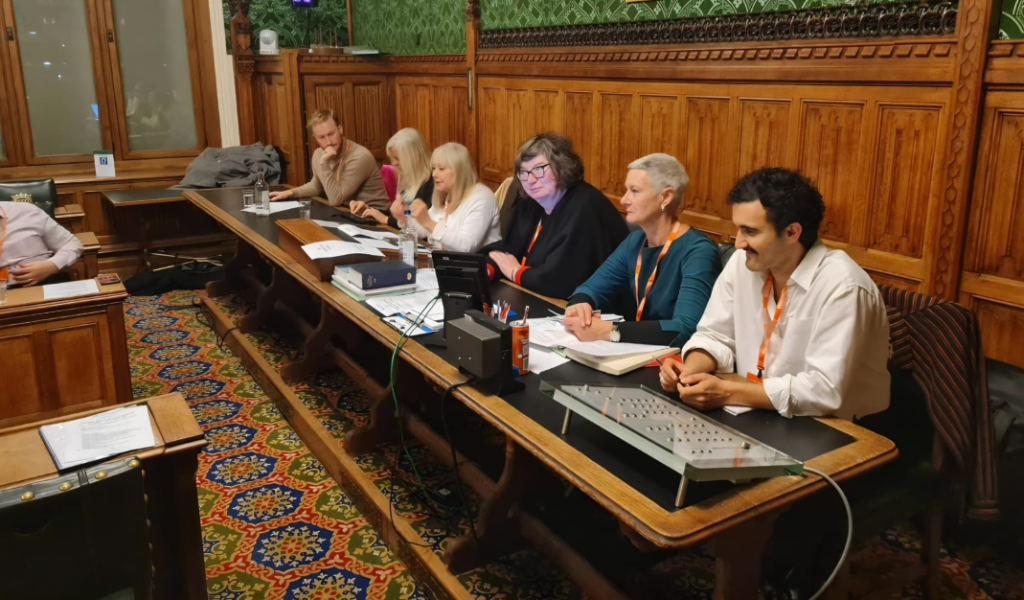
Participants included human rights expert Melanie Field OBE; barristers Robin Moira White and Oscar Davies; solicitor Ricky Gama; and Emily Brothers. Both Melanie Field and Emily Brothers previously worked at the Equality and Human Rights Commission (EHRC). Our joint CEO, Dr Debora Diamond, chaired the event.
This post summarises Melanie Field OBE’s proposals, which she posted on LinkedIn three days later (Friday, 20 November), in an article titled “How to repair the Equality Act 2010”, and forms part of a series of articles on the participants’ thoughts.
Melanie Field Biography as read on the night of the event.
Melanie Field is a freelance independent adviser on equality and human rights. Until 2023, she was Chief Strategy and Policy Officer at the Equality and Human Rights Commission. Prior to joining the EHRC, Melanie had a 25-year civil service career specialising in equality and human rights policy. She led the development of significant advances in equality legislation, including outlawing sexual orientation discrimination in services and public functions and leading the creation and implementation of the Equality Act 2010, for which she was awarded the OBE in 2011. Her final civil service role was steering the parliamentary passage and subsequent implementation of the Marriage (Same Sex Couples) Act 2013.
Field’s arguments can be contextualised as:
- Impact of the FWS Judgment: Field contends that stripping away legal gender recognition for discrimination law purposes has caused the Equality and Human Rights Commission (EHRC) and others to interpret single-sex exceptions as barring trans people from services aligned with their lived gender. She argues this effectively makes a service shared by natal women and trans women impossible unless opened to men as well, turning a protective statute into a vehicle for exclusion.
- Critique of Current Guidance & Discourse: She criticises the UK government for failing to review the position after a change of Prime Minister in July, points to NHS England’s single-sex guidance and the EHRC’s Code of Practice as unworkable or overly restrictive, and highlights the role of a well-funded gender-critical and culture war campaign alongside poor implementation.
- Balancing Competing Rights: While defending freedom of belief, Field argues the law must limit manifestations of belief that disproportionately infringe others’ rights, comparing this to accommodating religious views on marriage while still enabling same-sex marriage and prohibiting discrimination. She notes that although a challenge in Strasbourg seems likely to succeed eventually, waiting is harmful to trans people and their wider networks.
“The FWS judgment, by stripping away legal gender recognition for the purpose of discrimination law, has resulted in the EHRC and others interpreting the single-sex exceptions in the Equality Act as preventing the inclusion of trans people in services for their lived gender. If correct, this would mean that a service that is for both natal women and trans women is impossible unless it’s also open to men – so not a women’s service at all. A law that was created to protect against discrimination and harassment is now being used as a weapon to inflict it on one of the most disadvantaged groups. While it seems highly unlikely that this will survive a legal challenge in Strasbourg, we cannot and should not wait for that to happen. Every day we wait results in trans people being denied their human rights and means that their families, friends and colleagues are prevented from being able to work and enjoy social activities with them as the people they are.”
“For all these reasons, I feel the time has come for me to share my proposals for resolving this situation. It will require primary legislation – a targeted Bill to amend the Equality Act – with full parliamentary scrutiny. Ideally, this would be a government Bill preceded by a full public consultation – this would provide the opportunity to set out a clear public policy rationale for the proposed legislative amendments and would reduce the risk of unintended consequences. But if the government continues to shirk its responsibility, I hope that it will be taken forward as a Private Member’s Bill”.
“The Bill I’m proposing would contain provision not only to restore the originally intended interaction between the Equality Act 2010 and the Gender Recognition Act 2004, but also to clarify the meaning and operation of the Equality Act in areas where questions have arisen – both in FWS and before and since that judgment. A carefully balanced Bill providing more clarity and certainty for duty-bearers and rights-holders would not only guard against the poor implementation practice which led to litigation and entrenched, polarised positions, but could also prompt a more productive and nuanced public discourse about how competing rights can and should be balanced.”
TransLucent thanks all the panel members who participated that night. A link to Melanie Field’s LinkedIn article, ” How to repair the Equality Act 2010, ” is below:
https://www.linkedin.com/pulse/how-repair-equality-act-2010-melanie-field-nhvxe