








Dr Cal Horton’s family forced to leave the UK
OPINION: From our chair.
It’s devastating to learn that Dr Cal Horton, someone whom I have long admired, along with their immediate family, is fleeing the UK, driven out by the relentless tide of transphobia.
Cal isn’t the only one: Dr Beth Upton and Dr Victoria McCloud have also been forced to seek a better life elsewhere.
The reality is that the UK is not safe for many trans people – it’s a tinderbox of hate, discrimination and segregation.
When a family uproots everything to move halfway across the world, it’s usually to pursue a dream. But in a raw, deeply moving essay titled “Leaving the UK with a heavy heart“ on the blog Growing Up Transgender, Cal reveals a far harsher reality.
Relocating to Australia (as did Dr Beth Upton) isn’t a leap toward new adventures; it’s a forced exile, as was the case with ex-High Court judge Dr Victoria McCloud, who was forced to move to Ireland because of transphobia, and the realities of living in the UK are becoming nigh impossible for some trans people.
Cal’s experience echoes that of countless parents of trans children who aren’t chasing opportunity, but are compelled by sheer necessity to protect their child’s safety, mental health, and basic dignity. Behind the headlines lies a relentless erosion of safety and rights: shifting school guidelines that compromise a child’s trust, severe restrictions on gender-affirming healthcare, and a toxic culture war that bleeds into everyday public spaces that every trans person encounters every day.
Cal’s post said:
“Trans children’s healthcare has been removed and criminalised, replaced with state mandated conversion. Medical doctors have been made to withdraw NHS prescribed healthcare that they know is important, against their own medical judgement, in ways that those same medical doctors know is deeply unsafe and harmful. Families are being targeted with social services investigations that feel deeply threatening.
Trans children who have been supported and included at school for years were told, bad luck, policy change. Rights were removed, children have faced humiliation and segregation. My daughter has been out of school since July, as have so many supported trans kids. Sport as leisure is already a no-go. We can’t use our local swimming pool without stress. Public bathrooms are a potential source of aggression. I’ve been screamed at to get out of toilets twice since the Supreme court ruled against trans life. Looking at the legal, medical, media and political landscape, I can’t see a safe, secure and dignified future for my daughter in the UK”
What makes Cal’s announcement so agonising is the sheer scale of the personal sacrifice – a career, the quiet heartbreak of packing up a lifetime of memories, saying goodbye to elderly grandparents who may never see their grandchild grow up in person, and abandoning siblings, lifelong friends, and the familiar comfort of home.
Venturing across the globe to a country where they have no guaranteed safety net or existing support network is daunting, yet remaining in a place that treats their child’s identity as a political battleground was no longer an option. Ultimately, Cal’s sad, moving post serves as an urgent, haunting call to conscience for all of us, but especially politicians.
Trans people face discrimination every day, in the media, in society, in healthcare and more recently, specifically at work.
The Lemkin Institute for Genocide Prevention and Human Security has issued two statements regarding the UK
LINKS:
(1) https://www.lemkininstitute.com/red-flag-alerts/red-flag-alert-on-anti-trans-and-intersex-rights-in-the-uk
(2) https://www.lemkininstitute.com/statements-new-page/statement-on-the-anti-trans-and-anti-intersex-ehrc-code-of-practice-in-the-united-kingdom
Trans social genocide is a chilling reality in the UK – some other countries know this and shout it out. However, many UK politicians refuse to listen – indeed, some try to outdo each other and make it worse.
Culture wars stink.
Authored by Steph Richards, 4th October 2026
TransLucent Applies to the High Court to Intervene in the Hampstead Heath Ponds Case.
The Directors of TransLucent are pleased to confirm that we have applied to the High Court to intervene in the Hampstead Heath Ponds case – one that could prove pivotal for trans people in the future.
Join the Fight: Donate to the TransLucent Legal Fund
The anti-trans group Sex Matters is once again taking legal action in an attempt to exclude trans women from the Hampstead Heath Ladies’ Pond. Their challenge aims to force the City of London Corporation to abandon its inclusive policy, risking a harmful precedent for trans rights nationwide.
In April, we instructed our legal team at Leigh Day to prepare a formal intervention. Sex Matters bases its argument on a narrow reading of the For Women Scotland judgment, claiming the Equality Act 2010 defines “woman” solely by biological sex. We believe this stance is divisive and legally unsound. The City of London Corporation has affirmed that the Ladies’ Pond is not a “single-sex service” under the exceptions in the Equality Act that would permit exclusion.
The Corporation remains committed to maintaining trans-inclusive arrangements, including signage affirming that transgender women are welcome.
The Mandate for Inclusivity
This renewed legal action ignores overwhelming public support for inclusion. In a recent consultation of over 38,000 participants, 86% supported maintaining trans-inclusive access to the ponds. Additionally:
- 81% of pond users reported positive experiences under the current policy, describing trans swimmers as “unremarkable”.
- 90% of respondents rejected “compromise” models like separate changing rooms or timetabled sessions, labelling them as “segregation” and a safety risk to trans people.
Protecting Our Sanctuary
For decades, the Ladies’ Pond has provided a safe haven for women in all their diversity. As the Kenwood Ladies’ Pond Association (KLPA) affirms, trans women have swum there for many years “without incident,” and their presence is integral to the space’s unique spirit.
Efforts to exclude trans women result in harmful “gender policing,” targeting any woman—cis or trans—who does not conform to narrow definitions of femininity. We stand with all swimmers who believe trans women are women and deserve the right to swim in peace.
Solicitors Ellie Fawcett, Anna Dews and Partner Ricardo Gama of Leigh Day represent us, with Hannah Slarks from 11KBW and Crash Krylova (Wigley) from Landmark Chambers instructed as counsel.
Steph Richards, the Chair of TransLucent Directors, said:
“This case could have profound implications for the ability of organisations to provide services which are inclusive of trans people, and for the ability of trans people to use facilities like these in their day-to-day lives in accordance with the gender they live”.
Our application includes heartfelt testimony from trans people who use the single- gender bathing ponds regularly and find them to be a place of acceptance and tranquillity that clearly means a great deal to them. We are seeking permission to intervene to provide the court with this perspective directly from trans people, both as swimmers who use the ponds and as users of other public facilities where similar issues may arise”
Ellie Fawcett, solicitor at Leigh Day, said:
“Too often, issues impacting trans people are debated without hearing from the
people most affected. This application is about making sure those voices are before
the court. The evidence filed on behalf of TransLucent shows that the Hampstead
ponds are more than a place to swim; they are a place of community, belonging and
wellbeing.
“The outcome of this case could have implications far beyond the ponds, affecting
how trans people are able to access services and participate in public life across the
UK. We hope that by hearing directly from trans people, the Court will have the
fullest possible picture of what is at stake in this case.”
How You Can Support the Fight for Trans Rights.
We must meet the determination of those who seek to exclude us – we know they are very well organised and are incredibly well funded.
Your support for our legal fund enables us to:
- Legal Defence: Enabling our team to monitor proceedings and build a strong counter-case.
- Public Awareness: Creating fact-based content to counter misinformation and share the lived experiences of trans women.
- Sustained Advocacy: Allowing us to continue working with MPs and human rights organisations to defend trans protections in the UK.
Trans people deserve dignity, safety, and equality. Our existence is not up for debate.
Join the Fight: Donate to the TransLucent Legal Fund
LINK: https://www.gofundme.com/f/working-for-the-trans-and-gender-diverse-community
TransLucent Applies to the High Court to Intervene in the Hampstead Heath Ponds Case.
Emily Brothers: Exclusion from Labour Women’s Conference.
Emily Brothers: Exclusion from Labour Women’s Conference.


UN: Revised Code of Practice risks institutionalising discrimination against transgender and gender-diverse persons, warn UN experts
On the 17th of August 2026. The Office of the High Commissioner for Human Rights at the United Nations published this statement:
GENEVA – UN human rights experts* today warned that the UK’s revised Code of Practice for Services, Public Functions, and Associations, in force as of 5 August, may place transgender and gender-diverse persons at heightened risk of discrimination and exclusion.
“We remain concerned that the revised Code adopts an unduly rigid approach to trans-inclusive services, leaving insufficient scope for service providers to consider whether inclusive arrangements are lawful, justified and appropriate in the particular circumstances,” the experts said.
The revised Code treats a service that includes both cisgender and transgender women as a mixed-sex service and states that such a service must be open to all users. In effect, except in the case of membership-based associations, providers are advised that a women’s service must either exclude transgender women or admit men, leaving transgender persons to use services designated for their sex as recorded at birth or separate facilities, where available.
“When legal guidance effectively presents exclusion as the means of complying with the law, discrimination risks becoming institutionalised rather than assessed on the basis of necessity and proportionality.”
The experts emphasised that the implementation of domestic legislation and judicial decisions must remain consistent with international human rights obligations, including the principles of equality, necessity and proportionality. They warned that implementing the Code will require transgender persons to disclose their gender identity, risking harassment, while exposing all women to scrutiny based on gender stereotypes, intrusive questioning or demands for personal information.
“Any request for information relating to a person’s sex or gender identity must pursue a legitimate objective, be strictly necessary and proportionate, and entail appropriate safeguards for privacy and dignity. Such enquiries should never become routine or discriminatory.”
The experts recalled their joint statement of 26 February 2026, which raised concerns that elements of the draft guidance appeared incompatible with the United Kingdom’s international human rights obligations.
“We recognise the importance of measures to protect the rights of women and girls, including to safety, privacy and freedom from violence. At the same time, international human rights law requires that such measures are inclusive of all women and girls, including transgender and intersex women, and respect the rights of all persons without discrimination.”
The experts urged the Government and the Equality and Human Rights Commission to monitor the impact of the guidance and review provisions that engender discrimination.
“Human rights are not a zero-sum exercise. Protecting the rights of women and girls in all their diversity and protecting the rights of transgender, gender-diverse and intersex persons are equal, overlapping, and complementary obligations.”
LINK: https://www.ohchr.org/en/press-releases/2026/08/uk-revised-code-practice-risks-institutionalising-discrimination-against
*The experts:
- Graeme Reid, Independent Expert on protection against violence and discrimination based on sexual orientation and gender identity
- Claudia Flores (Chair), Ivana Krstić (Vice-Chair), Dorothy Estrada-Tanck, Haina Lu, and Laura Nyirinkindi, Working Group on discrimination against women and girls
- Robert McCorquodale (Chairperson), Fernanda Hopenhaym (Vice-Chairperson), Lyra Jakulevičienė, Damilola Olawuyi and Pichamon Yeophantong, Working Group on the issue of human rights and transnational corporations and other business enterprises
UN: Revised Code of Practice risks institutionalising discrimination against transgender and gender-diverse persons, warn UN experts
A Message From Our Founder – Steph Richards


A Message From Our Founder – Steph Richards
Crowdjustice Messages: EHRC Draft Code of Practice.
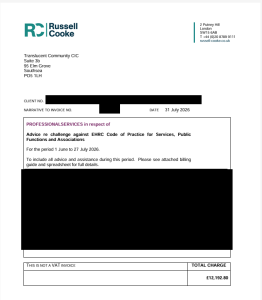
Just over 48 hours ago, at 06:01 AM on Monday, 6th July 2026, TransLucent launched its Crowdfunder to challenge the Draft EHRC Code of Practice by Judicial Review.
PLEASE DONATE: https://www.crowdjustice.com/case/challenging-the-ehrc-code-of-p/
Since then, over 309 people have donated, and we are over 70% of the way to our target. Many people are leaving messages. This post highlights some of what has been said.
Crowdjustice Messages: EHRC Draft Code of Practice.
Urgent Travel Advisory Issued for Trans and Gender Diverse People.
An urgent travel advisory has been issued warning LGBTQIA+ people, and particularly trans and gender-diverse travellers, about the risks of visiting or relocating to the UK.
The advisory was published on 30 June 2026 by the Trans Exile Network (TEN) and countersigned by TACC (Trans Advocacy and Complaints Collective), Compton’s Café CIC, and Transpilot.
What the Advisory Says
The advisory is being circulated to EU and other national organisations that advise or support LGBTQIA+ people, offer travel to the UK, or publish travel and safety guidance. It sets out a series of concerns rooted in recent UK legal and policy changes, including the non-recognition of legal gender changes for equality purposes, restrictions on access to single-sex spaces, the placement of trans prisoners according to sex assigned at birth, and NHS ward allocation policies.
Speaking as part of the release, former Scottish judge Dr Victoria McCloud, now living in exile in Ireland, described the advisory’s core message as “stay safe, stay away“.
In terms of legal recognition, the UK ranks among the lowest-ranked in Europe, alongside Bulgaria, Georgia, Hungary, Russia, and Slovakia. Further, the Lemkin Institute has issued the UK a second red flag, warning of the social genocide of trans people.
Why This Matters
The advisory reflects a wider shift in the UK’s legal landscape following the Supreme Court’s ruling on the definition of sex under the Equality Act, and the subsequent Code of Practice developed by the Equality and Human Rights Commission.
For many in our community, this news will be sobering but not surprising, as it puts into words a reality that trans people navigating UK public life have been experiencing directly.
Standing With Our Colleagues
We want to highlight the work of TEN, TACC, and Compton’s Café CIC in bringing international attention to these issues, including Carla Ottersen’s detailed coverage of the advisory published via Compton’s Café.
We will continue to monitor developments in UK law and policy as they unfold, and we encourage anyone with questions about their own situation to reach out to TEN, TACC, Compton’s Café, or TransLucent directly for support. TransLucent endorses the message that the UK is not a welcoming country for trans and gender diverse people, and they should avoid travelling to the UK.
Urgent Travel Advisory Issued for Trans and Gender Diverse People
TransLucent Letter to the EHRC June 14th 2026
Correspondence Unit
Equality and Human Rights Commission
Arndale House
The Arndale Centre
Manchester
M4 3AQ
June 14, 2026
Dear REDACTED
At our meeting with you on Friday in relation to the Commission’s Code of Practice, now laid before Parliament, we raised with you a number of matters which are presently of great concern to trans people in the UK.
It was agreed that we should write to you formally to seek an answer on these matters that can be shared publicly. As also agreed, we will write to you separately to provide evidence and examples of the practical unworkability of the Code as it now stands.
Our concerns: the ‘intermediate’ position of trans people, and
The unworkability of s7,
Both under the FWS Supreme Court ruling and the recent EHRC Code on the provision of services.
We were particularly concerned to note the position advanced by your Chair, Dr Mary-Anne
Stephenson and Chief Executive John Fitzpatrick at the House of Commons joint Women and
Equalities Sub-Committee (WESC) and Human Rights Sub-Committee (HRSC) session on Tuesday last, at which they put forward the position which can be summarised as:
Trans people should be accommodated in ‘third spaces’ away from cis men and women, and
Ms Stephenson and Mr Fitzpatrick saw the state of the law as satisfactory and certainly not a state which would cause them to advise government that a change in the law was required.
We were, frankly, shocked at the complacency, lack of engagement with practical consequences for trans people (illustrated so clearly in the OEO Equality Impact Assessment) and the fall back on ‘common sense’ as an answer to questions from the MPs.
Coming shortly to the particular matters on which we seek an answer to understand the EHRC’s
position, we also noted Ms Stephenson’s comment that the Supreme Court had had Goodwin and Article 8 in mind because they are mentioned in the judgment.
We find that a shockingly complacent position given that Ms Stephenson failed to mention that, after demonstrating that they were aware of the two important sources of law, Ms Stephenson omitted to mention that the Supreme Court failed entirely to perform any analysis (as is to be expected under the UK Human Rights Act) of whether its ‘sex is biological sex and does not include certified sex’ determination was consistent with the
European Convention, particularly Article 8 and relevant case law such as Goodwin.
Goodwin Compliance.
Goodwin was very clear that :
‘In short, the unsatisfactory situation in which post-operative transsexuals live in an
intermediate zone as not quite one gender or the other is no longer sustainable. (para 90)
And that:
‘…the Court considers that society may reasonably be expected to tolerate a certain inconvenience to enable individuals to live in dignity and worth in accordance with the sexual identity chosen by them at great personal cost.’ (para 91)
Does the EHRC accept that banishing trans people to ‘third spaces’ is precisely placing them in the inappropriate ‘intermediate zone’ identified by the ECtHR in Goodwin whereas allowing them to be recognised in the identity they have transitioned to would alleviate this breach of Article 8?
Does the Commission accept that evidence available, including the FOI – based studies carried out by TransLucent shows that trans people’s use of services aligned with their gender has caused minimal or no difficulties?
Does the Commission accept that the negative impact on trans people and others of attempting to force trans people into third spaces, is disproportionate to any gain?
Does the Commission accept that the present position is likely to have put the UK in breach of Article 8 and if not, why not?
Section 7 of the Equality Act 2010.
This section defines the protected characteristic of Gender Reassignment.
Section 7(1) provides:
‘A person has the protected characteristic of gender reassignment if the person is proposing to
undergo, is undergoing or has undergone a process (or part of a process) for the purpose
of reassigning the person’s sex by changing physiological or other attributes of sex.’
It has generally been accepted that physiological attributes have included such matters as the changes brought about by hormone therapy or surgery, and ‘other’ attributes include adopting a different honorific, name, and matters such as hairstyle or style of dress.
The difficulty with the Supreme Court ruling is that if ‘sex’ is ‘biological sex as recorded at birth’, it can never be altered, and section 7 now appears otiose under the Supreme Court ruling.
Does the EHRC accept that the Supreme Court ruling appears to render Section 7 otiose?
Does the EHRC accept that this is an absurd position?
Does the EHRC accept that the absurd position is contrary to and incomprehensible when read with BOTH the will of parliament in enacting the GRA 2004 and the relevant parts of the Equality Act, AND those parts of the Supreme Court judgment which suggest that trans people are still protected?
How are courts and tribunals to assess whether individuals have the protected characteristic of gender reassignment in future?
Whilst appreciating that the Commission will have many calls on its time, we are sure that these are questions the Commission has asked itself and its advisers since the FWS judgment appeared and before proffering its draft code.
We would appreciate answers within a timescale which will allow the answers to be shown to MPs considering the draft Code.
Thank you for taking the time to read and consider this letter. We look forward to your response.
Sincerely yours,
Robin Moira White
Dr Debora Diamond
TransLucent Letter to the EHRC June 14th 2026
Petition on restoring trans rights
The publication of the Draft Code on Services and Associations on Thursday, 21 May 2026, has brought into sharp focus how the Supreme Court judgment in ‘For Women Scotland v Scottish Ministers’ of April 2025 has interfered with the rights of trans people in the UK.
Rebecca Bennett (not a member of the TransLucent team) has created a petition (ending on 19th December 2026) with over 18,500 signatories.
https://petition.parliament.uk/petitions/770527
Her request reads as follows:
I want the House of Commons to disapprove of the Equality Act 2010: Draft Code of Practice for services, public functions and associations, 2026, laid on 21 May 2026.
We are concerned that the guidance published on 21 May 2016 could lead to women being excluded from women’s spaces based on their appearance. We think that the guidance will make it harder for trans people to participate in sport as either gender, and that it can limit trans people from accessing toilets and other facilities that match their acquired gender. I therefore think the House of Commons should disapprove this draft guidance.
In view that Rebecca has gained significant support, trans people and allies may wish to sign her petition.